Monica Mann Reflects on a Life Dedicated to Healthcare Transformation
April 30, 2026
From the earliest moments of her life, Monica Mann was shaped by the toll a serious medical condition can take on a family. At just three years old, she witnessed her family’s profound grief after the loss of her younger sister to spina bifida – a tragedy that left an indelible mark and set her on a lifelong path of empathy and purpose.
“Losing my sister left a mark on my heart that guides everything I do,” Monica says. “I am reminded every day that there’s no clinical measure for love, but that families live incredibly brave lives to demonstrate love in so many beautiful ways.”
This deeply personal understanding of loss became the foundation for a career dedicated to transforming the lives of patients and families impacted by rare conditions.
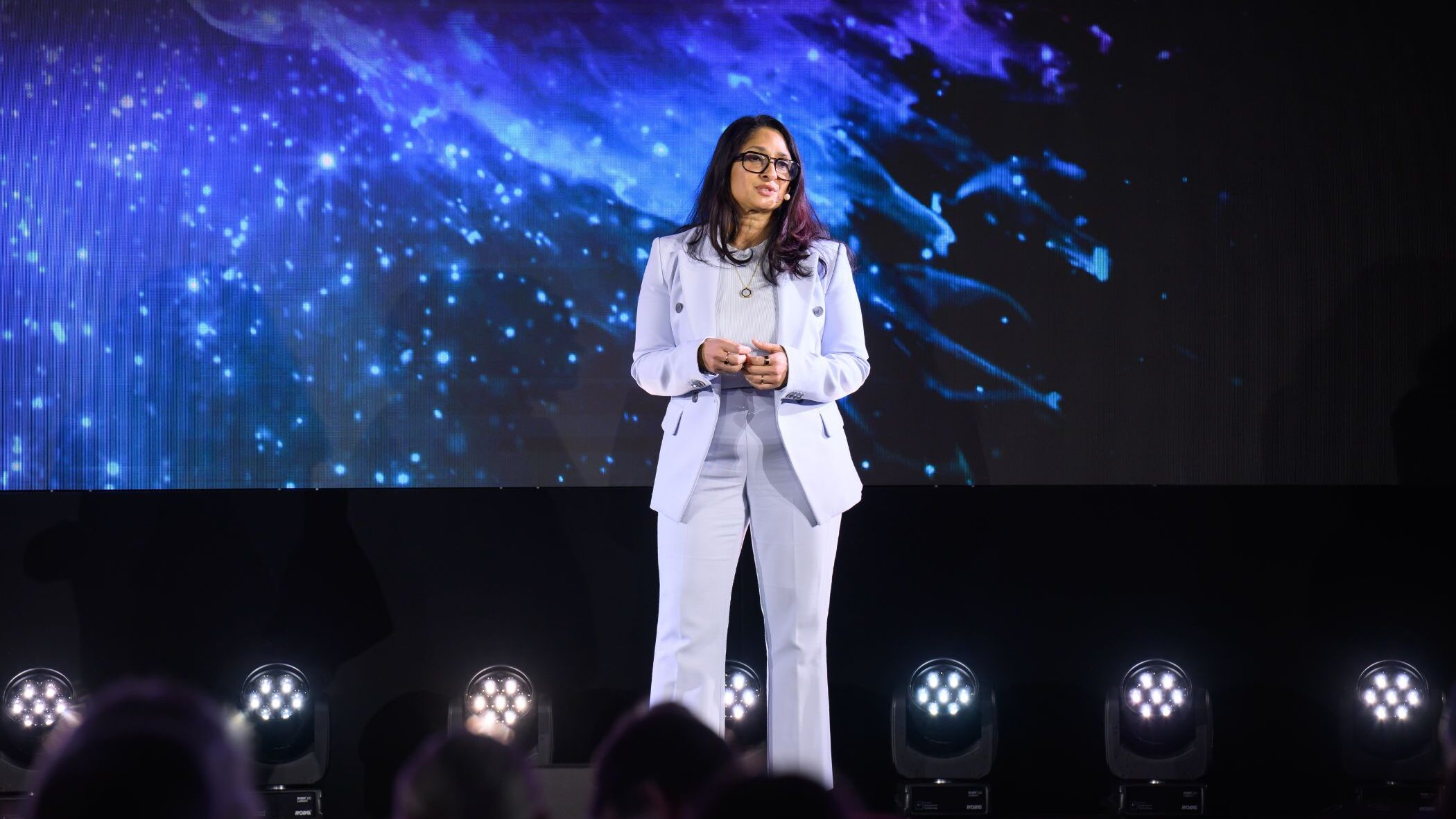
Now, as Vice President and Global Medical Unit Head of Skeletal Conditions at BioMarin, Monica channels her scientific background and lived experience into action – leading a team committed to advancing science, improving care and ensuring that every innovation is rooted in the real stories and needs of the community. Her journey is not just about scientific progress, but about honoring the resilience of families and turning it into hope for others.
This week at the Pediatric Endocrine Society Annual Meeting, she and her team will be among those from BioMarin sharing new data and insights about BioMarin’s research in achondroplasia and hypochondroplasia.
“Conferences like PES are where science meets humanity,” says Monica. “It’s a chance to connect, listen and share the latest advances with people who care deeply about these conditions and the community.”
At PES, BioMarin will highlight clinical development updates and research reinforcing the company’s commitment to scientific excellence and collaboration. In particular, BioMarin will be sharing research on measures beyond height, data that is particularly relevant to skeletal condition communities.
When patient communities share what matters most to them, it’s clear that evaluations beyond just height – including greater independence – are a key area for research to focus,” says Monica. “These are the changes that can impact daily living and functionality, not just for individuals but for their families as well.”
Making the Move to BioMarin
Monica joined BioMarin in 2025, drawn to the company for its leadership and legacy in the rare disease space.
She notes she was inspired by the efforts of not only BioMarin’s science, but also by the company’s approach to patient advocacy: specifically, how advocacy teams partner with communities that have historically lacked the infrastructure and support of more common conditions.
“I wanted to be somewhere that really listened to patients’ stories, and made those stories the foundation for innovation,” says Monica, who earned her Ph.D. studying a preclinical model of multiple sclerosis at the Medical College of Wisconsin. “I have had the privilege of working in and watching some conditions absolutely transform with new treatments, but a lot of conditions don’t have the kind of networks needed to meaningfully change outcomes even when a new treatment is approved. Sometimes advocacy is just a couple of people who have a deeply personal connection to someone living with a rare condition that is not well understood. So, bridging that care gap is really important and absolutely requires collaboration.”
Since joining BioMarin, Monica has been inspired by the company’s commitment to going beyond medicine to affect healthcare transformation. In rare disease, this means working to help improve the entire care continuum, from early symptoms and diagnosis to treatment and measuring real world outcomes.
“Every condition is going to have very different needs as it pertains to defining science and the disease state,” she says. “How do we help get patients from where they’re getting initial signs and symptoms of a condition to a physician who can diagnose the condition, and also give them an idea of what treatment or care pathways might look like for them? What do those outcomes actually look like long-term, and how can we channel those learnings back to our understanding of the condition to evolve it further in partnership with the medical and patient community?”
Accelerating Change Together
Building on BioMarin’s commitment to collaboration and addressing unmet needs in achondroplasia, Monica and her team are now turning their focus to other genetic skeletal conditions, such as hypochondroplasia, where innovative approaches are paving the way for meaningful progress for this currently untreated condition. Through a cross-functional program called Accelerate Change Together (ACT), the team is driving sustainable, system‑level change – working to shift healthcare from delayed recognition to proactive identification of individuals with hypochondroplasia. The program seeks to support earlier, genetically confirmed diagnoses, advance science through identification of new genetic variants and strengthen coordinated care, with the aim of ultimately improving long‑term outcomes for patients and families. Importantly, as Monica highlights, close partnership with the community is central to defining and shaping the landscape.
“At its core, ACT is designed to close the gap between scientific understanding and real‑world care in rare genetic skeletal conditions, including hypochondroplasia,” she says. “ACT aims to turn scientific understanding into real impact for people living with hypochondroplasia by embedding evidence‑based care into routine clinical practice – driving adoption, not just awareness.”
Monica explains that this process will help ensure that advances in recognition and diagnostics translate into meaningful, measurable improvements for patients and families. A central component of this approach is helping clinicians move from suspicion to diagnosis through practical, accessible solutions, including genetic screening options.
“This supports earlier and more actionable identification of hypochondroplasia by combining targeted education, improved access to genetic testing and advances in variant interpretation,” says Monica. “We believe this will help reduce diagnostic uncertainty and unnecessary delays in care.”
This is part of a broader, coordinated implementation science strategy focused on identifying gaps in care, removing healthcare system barriers and offering healthcare providers practical, scalable solutions.
Ongoing evidence generation, clinician engagement and collaboration across disciplines all play key roles in transforming care for a condition such as hypochondroplasia, where scientific understanding is still evolving.
“ACT creates a durable framework for this change,” says Monica.
A Life Spent in Healthcare
Many years into her career, Monica says she still often reflects on what originally led her down this path. In addition to the death of her younger sister, her family experienced another loss several years later when her cousins navigated a difficult journey with their son diagnosed with Duchenne muscular dystrophy.
“My path has consistently been about translating science into real-world clinical practice, increasingly at a global scale,” she says. “A lot of this was born out of not only my scientific career starting at the bench and later as I engaged with many different healthcare providers and communities across a variety of conditions, but even before that, watching my family navigate rare diseases. The common thread through all these experiences is the love and bravery people have to demonstrate as they look for answers and navigate a new normal.”
Monica notes she is more driven than ever to apply the firsthand experience and knowledge gained throughout her life to help build healthcare infrastructure that may lead to better outcomes
“Over the years, I’ve learned how we can translate clinical programs into defining clinically meaningful outcomes for patients,” Monica says. “But also, really start to map out what the educational and healthcare system needs so we can help patients get to a diagnosis and treatment faster.”