Finding a Way Forward: How the National MPS Society’s Pathways Program Supports Families at Diagnosis
May 6, 2026
When DeAnna and Alex learned that their daughter Savannah was living with a rare genetic condition called mucopolysaccharidosis type VI (MPS VI) just weeks before her third birthday, the diagnosis landed with a mix of fear, uncertainty and isolation.
“We weren’t really sure what to expect,” DeAnna recalls. “It was depressing, for lack of a better word. It was deflating. You felt very alone.”
Like many facing a rare condition such MPS VI (also known as Maroteaux-Lamy syndrome), DeAnna and Alex were suddenly navigating unfamiliar medical terms, unanswered questions and a future that looked very different from what they had imagined. Hope only began to emerge when they contacted the National MPS Society, a patient advocacy organization serving families with MPS and mucolipidosis (ML) across the United States.
The family was among the first to receive support through the organization’s Pathways Program, an innovative initiative designed to meet families where they are in the earliest – and often most overwhelming – days following diagnosis. Launched in 2018, Pathways provides face-to-face guidance from trained professionals at no cost for the first year following diagnosis. The program offers education, emotional support and practical resources, while linking families and individuals to a broader community of people who understand the realities of living with MPS or ML.
DeAnna recalls how impactful the early support and connection were for her family.
“The first family advocate that I had was amazing,” she says. “She actually came to the daycare and explained how the Society works and all the different wonderful families. And I was given that list of families to connect with.”
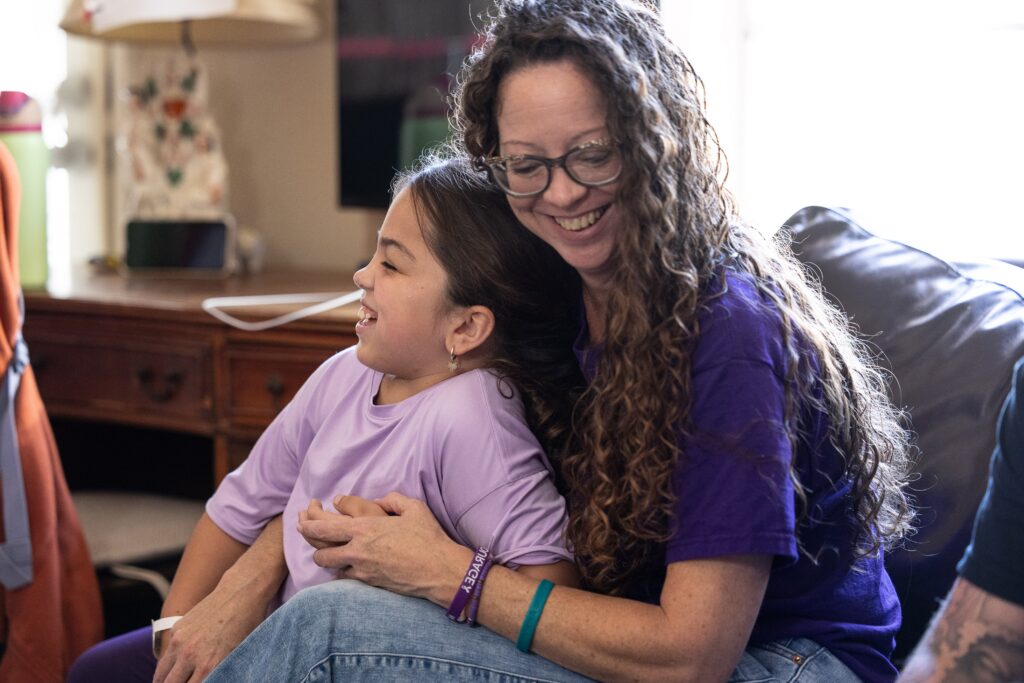
Savannah (left), with her mother, DeAnnna, was diagnosed with MPS type VI just before her third birthday.
Building the Pathways Program
The National MPS Society has spent decades building support networks, advancing research and raising awareness of MPS and ML. But according to Terri Klein, President and CEO of the Society and mother to a daughter with ML, the idea for the Pathways Program grew directly from what she and other leaders of the organization experienced in the days following their own children’s diagnoses.
“We had nowhere to go, no understanding, other than that death was imminent, that life was short,” Terri recalls. “I didn’t want any family to experience what I had gone through. And I realized that patient support and networks with other families were critical to ensure that those first days of diagnosis could be different for families in the future.”
The program, which BioMarin has supported since 2018, offers personalized, wraparound care that begins immediately after diagnosis, addressing not only medical information but the emotional, practical and day-to-day realities families face. At the center of the program is a face-to-face approach: Trained social workers and genetic counselors meet families in their homes to help them understand what the diagnosis means, what to expect and the appropriate next steps.
“We put a social worker or a genetic counselor in their home, walking through what this diagnosis means and then how to go forward,” says Leslie Urdaneta, Director of Family Support and Pathways for the National MPS Society. “And then we connect them with other families and provide, as best as possible, equitable access to information and resources.”
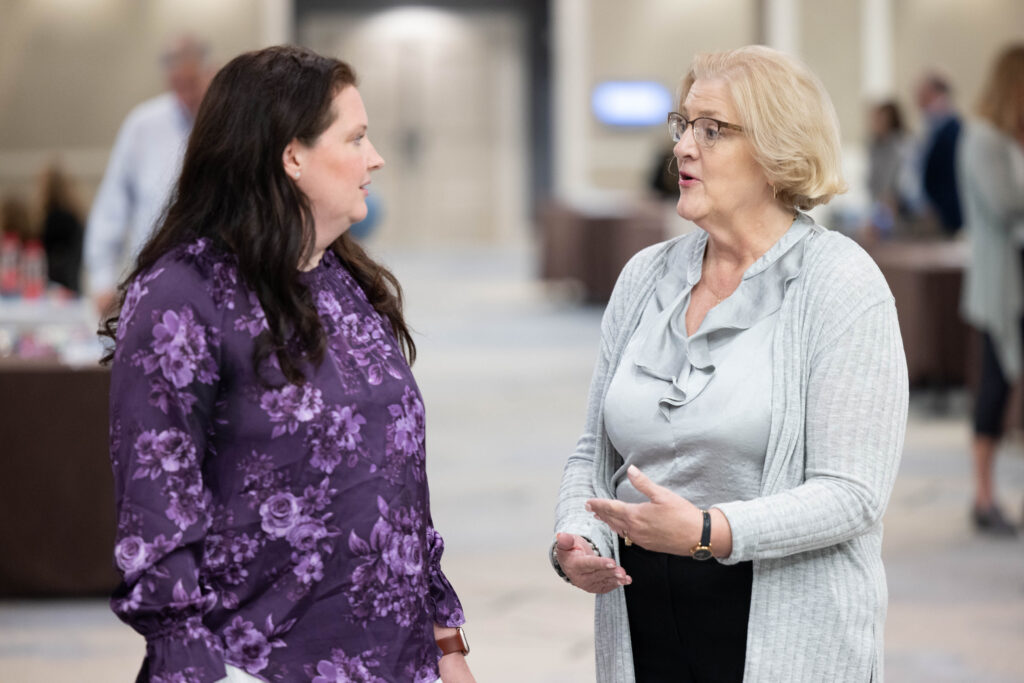
Leslie Urdaneta (left), speaking with National MPS Society President and CEO Terri Klein, oversees the Pathways Program.
Steve Holland, Chairman of the Board of the National MPS Society, knows firsthand how valuable this type of service is. He helped spawn the idea for the program, along with Terri and others, while reflecting on his experience when his three children were diagnosed with MPS type I.
“We let them know what treatments are available, what medical studies are available, or what would soon be available, what specialists they should consider,” he says. “We talk to them about the school resources.”
The Pathways Program also extends support beyond children and their guardians, as the journey to an MPS diagnosis can be particularly long and winding for some. Dana Caggiano, who lives with MPS type IVA (Morquio A syndrome), received her diagnosis at the age of 37 after years of believing she was living with a different skeletal condition.
“Being told a brand-new medical condition when I had something skeletal my whole life – it was extremely difficult,” she says. “That visit [with the Pathways team] eased my anxiety so much. Putting me in touch with other members of the Pathways Program and coming to the conferences and meeting other people – it definitely helps.”
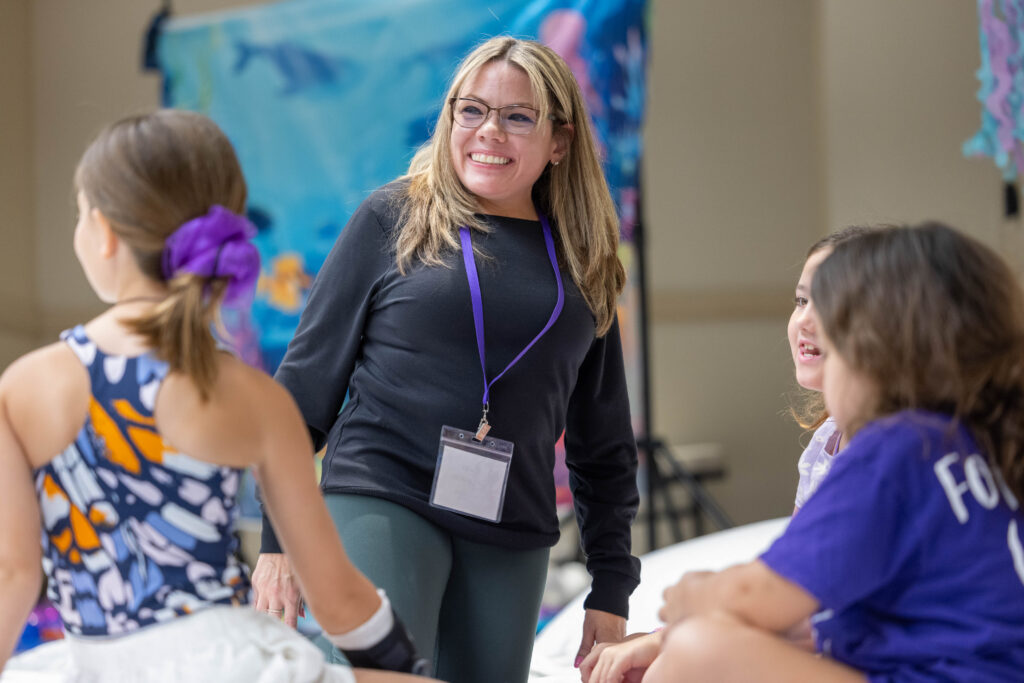
Dana was diagnosed with MPS type IVA at age 37 after believing for years that she was living with a different skeletal condition.
‘It’s the Community’
The combination of education and connection that Pathways provides can be transformative, especially in a community where patients and caregivers may never have met another person living with the same condition. For DeAnna, Alex, Savannah and her younger sister, Hailey, connecting with other MPS families helped them find their footing and their new rhythm.
“We have a pretty typical life,” DeAnna says. “It’s got the laughing and the loving and the hugging and the fighting – everything you would expect.”
For Alex, who notes following Savannah’s diagnosis he was “nervous, scared, didn’t know what to do,” that guidance and sense of belonging made all the difference.
“The Pathways Program, for me, is all about connection and building relationships in our community of MPS,” he says. “It’s the community that’s been amazing to me.”
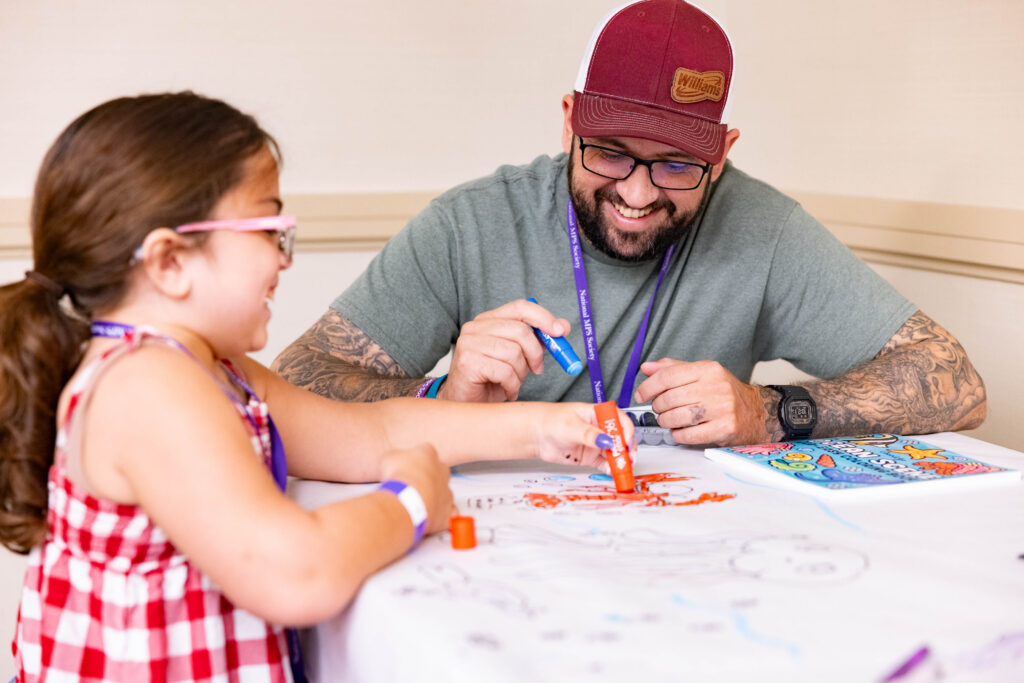
Savannah (left) with her father, Alex.
This article is the first in a two-part series on the National MPS Society’s community programming. View the second installment here.