
BioMarin is committed to understanding the impact of our business practices on the environment and managing our global emissions footprint. We further recognize the importance of understanding our climate-related risks and acknowledging our stakeholders’ interests in our plans to continue ensuring we prioritize minimizing our impact on the environment.
Our campuses consist of multiple manufacturing facilities that produce biologic and gene therapies and perform important pilot scale work, in addition to laboratories, warehouses and office space supporting our clinical development and commercial initiatives.
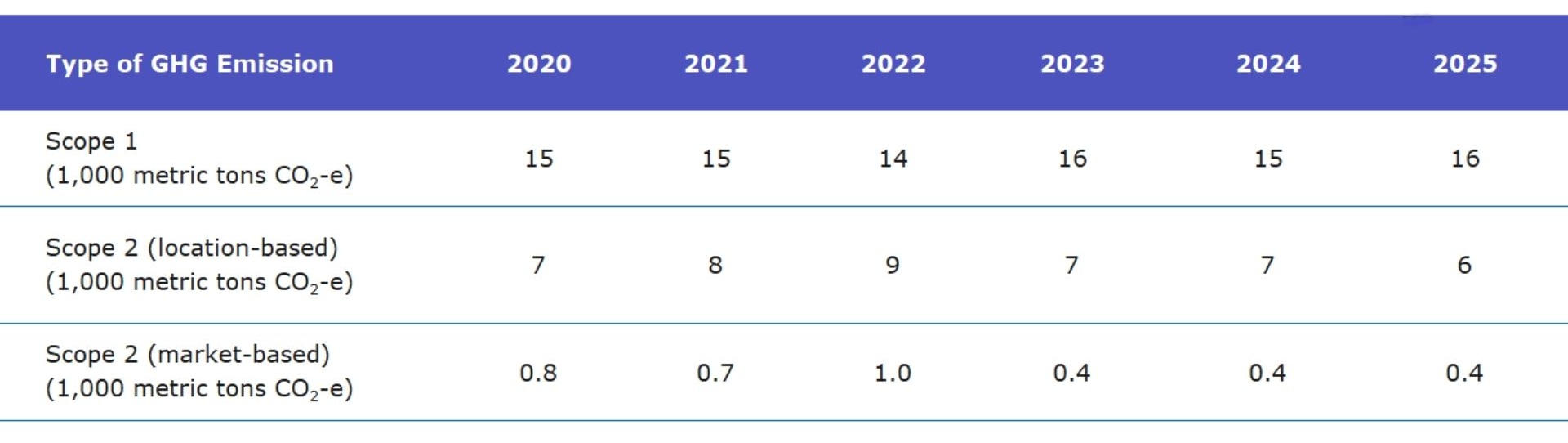
Data covers all buildings within our operational control at our Northern California and Shanbally campuses. Sources of Scope 1 emissions from our campuses include combustion of fuels by stationary equipment, releases of refrigerants and laboratory use of chemicals. Emissions related to our small fleet of vehicles were added to our inventory in 2025.
We calculated our emissions in conformance with the GHG Protocol’s Corporate Accounting and Reporting Standard and the Principles for Effective Disclosure section of the Recommendations of the Task Force on Climate-Related Financial Disclosures (TCFD).
Emission factors utilized include:
Per the GHG Protocol, Scope 2 market-based figures (as presented in our data table) differ from location-based figures in that they are based on electricity contractually purchased and are not based on the GHG intensity of the grid on which energy consumption occurs.
We contractually purchase renewable electricity from community choice aggregators, private suppliers, and utility companies. Renewable Energy Certificates (RECs) and Guarantees of Origin are used to demonstrate that the energy procured is from an eligible renewable source.
While total Scope 1 and 2 location-based GHG emissions have remained relatively flat, capacity utilization has increased at our manufacturing campuses. We continue to assess and implement impactful and cost-efficient mitigation strategies to minimize our carbon footprint.