Bringing Science Full Circle: Ben Schooler Shares What Has Motivated His Path at BioMarin
August 25, 2026
For Ben Schooler, curiosity started at home. His grandmother helped shape his early fascination with how the world works – a curiosity rooted in her own family legacy of science-driven problem-solving. That spark carried Ben all the way to the University of California, Santa Barbara, where he landed in a genetics lab during a time of rapid discovery in the early 2000s.
“It felt like we were at the beginning of something that could fundamentally change medicine,” Ben recalls. “I loved the science, but I also wanted to be somewhere that science became tangible for patients.”
That desire ultimately led him to biopharma – and to BioMarin. Since joining more than 18 years ago, Ben has worn many hats: advancing research at the bench, leading lab operations, and now focusing on strategy within Technical Operations. Each role, he says, offered a different vantage point on the same mission: transforming possibility into impact for patients.
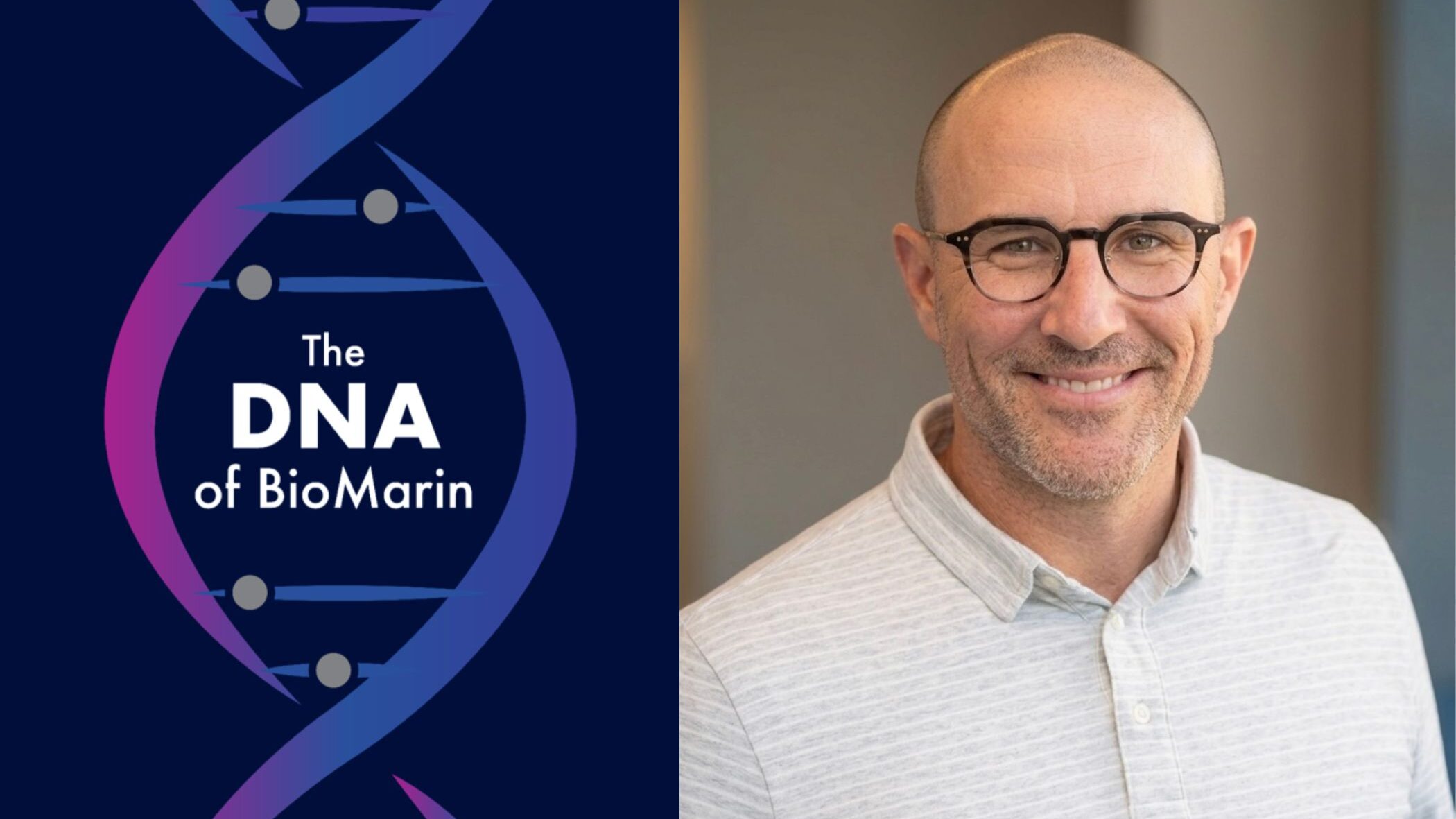
Ben recently shared his reflections in our employee profile series, “The DNA of BioMarin,” which draws inspiration from the four bases that constitute DNA: A (adenine), T (thymine), C (cytosine) and G (guanine) – by asking employees to reflect on the role that Aspiration, Connection, Translation and Gratitude play in their everyday work.
Read more about Ben and how early curiosity, meaningful connections with patients and their families families, a passion for science, and a deep belief in compassionate problem-solving have shaped his path at BioMarin.
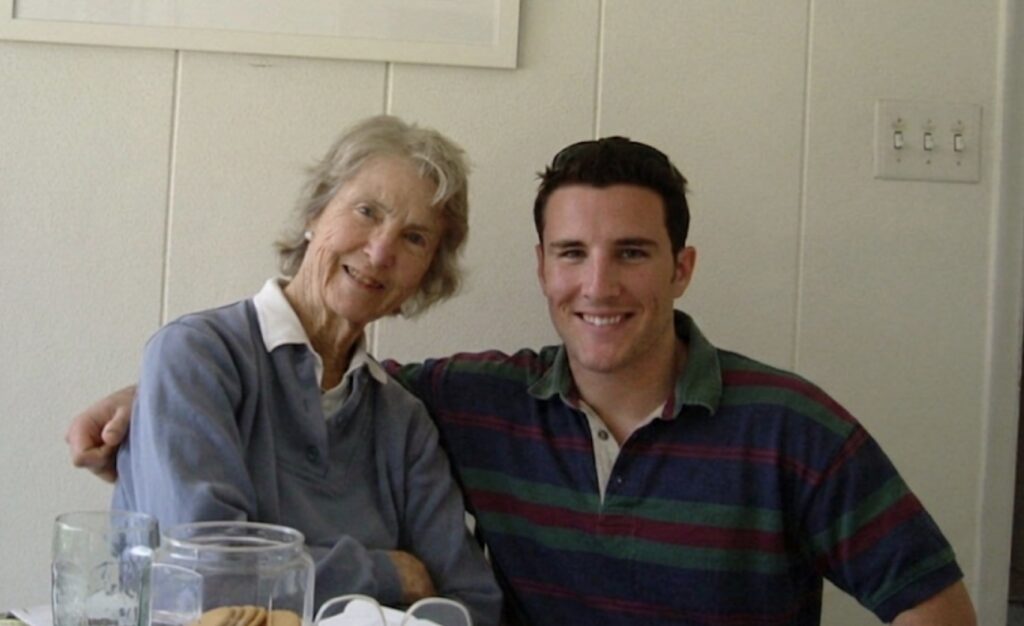
Ben credits his grandmother with inspiring his early interest in science.
ASPIRATION
How did you get your start in the biopharma industry? What do you aspire to accomplish through your work at BioMarin and in your career?
I first became curious about science thanks to my grandmother. She loved nature, was an avid birder, and had this genuine interest in how things worked. That curiosity was part of her family too – her grandfather was a chemist who used science to solve practical challenges. That idea stuck with me.
In college at UC Santa Barbara, I joined a genetics lab during a time of incredible progress in the field. That’s what led me to biopharma and, ultimately, to BioMarin.
Since then, I’ve been able to experience so much – starting in research, leading lab operations, then serving as chief of staff for Research and Early Development, and now focusing on strategy in Technical Operations. Those roles gave me very different perspectives on the same mission. At this point in my career, what drives me is bringing those perspectives together – understanding the science, the operational realities and the big-picture strategy – while never losing sight of why we do this work. Ultimately, I want to help BioMarin grow and continue delivering medicines that can genuinely change lives.
CONNECTION
What role does connection play at BioMarin?
Some of the most meaningful connections I’ve had at BioMarin have been with patients and their families. When I was leading lab operations, I had the chance to host facility tours for patients and their families. One family stands out to this day – they had two children living with CLN2 disease. The older sibling’s diagnosis prompted evaluation of the younger sibling, who was diagnosed approximately two years earlier in life. Seeing them together made the importance of early diagnosis tangible. It reinforced how meaningful it can be for families to have answers sooner and to better understand the path ahead. And it also made our work incredibly real.
I’ve been fortunate to meet several people on our therapies and hear directly how our medicines have changed their daily lives. Those moments have stayed with me and are a big reason I’ve chosen to spend much of my career here.
Connections inside BioMarin have mattered too. Moving from R&D into Technical Operations was a big leap for me. I knew the science, but manufacturing, quality and supply chain were completely new. I made the move because I wanted to understand another part of the business, and I was lucky to work with a leadership team that welcomed my curiosity. They didn’t expect me to have all the answers – they invested the time to teach me and challenge me. That experience shaped how I think about leadership and collaboration today.
More broadly, I’ve seen BioMarin’s Employee Resource Groups evolve from networks into meaningful, leadership-sponsored communities that help shape our culture. Catalysts for Change is a great example. It creates space for honest conversations about the issues affecting our lives, both inside and outside of work, and reminds us that connection, empathy and understanding are not soft skills – they’re essential to how we lead and collaborate together.
I’m incredibly grateful that I’ve had the rare chance to see work I was involved in very early eventually reach patients. On top of that, I’ve met some of the individuals and families whose lives have been directly impacted. Being able to see that entire journey is amazing.”
GRATITUDE
Tell us about something you’re grateful for in your career, and why.
I’m incredibly grateful that I’ve had the rare chance to see work I was involved in very early eventually reach patients. I was part of the research team in the early days of one of our metabolic conditions therapy programs and saw it move into the clinic remarkably quickly. Later in my career, I had the opportunity to learn what it takes to manufacture that therapy at GMP scale and make sure it reliably reaches the people depending on it.
On top of that, I’ve met some of the individuals and families whose lives have been directly impacted. Being able to see that entire journey – from the bench, through manufacturing, all the way to patients – is amazing. That’s something I’ll never take for granted.
I’m also grateful for the people who took chances on me, especially when I moved into Technical Operations. I had a lot to learn, and instead of viewing that as a limitation, my team embraced the perspective I brought from R&D and helped me build everything else I needed. That kind of support has shaped my entire career.
TRANSLATION
How do you hope your work will translate into impact for the patient communities BioMarin is working to support?
One thing I’ve come to appreciate is how much work the people who receive our medicines may never see – such as manufacturing strategy, supply planning, analytics – can have a huge impact on their lives. Sometimes what feels like a small improvement from a scientific or operational perspective can be truly transformative.
My background in R&D and my current role in Technical Operations give me a unique perspective. I can take a scientific mindset into manufacturing discussions while also understanding the practical realities of producing and delivering therapies globally. Much of my work now is about asking: Where can we simplify? Where are we creating unnecessary complexity? What can we anticipate and solve before it affects those who are counting on us?
For someone relying on our therapy, a supply-chain issue or manufacturing delay isn’t an abstract business problem – it can create uncertainty for their treatment. That’s what keeps me grounded. At the end of the day, I want my work to help ensure that when someone needs one of our therapies, it’s there – on time and with the quality and reliability they should expect.