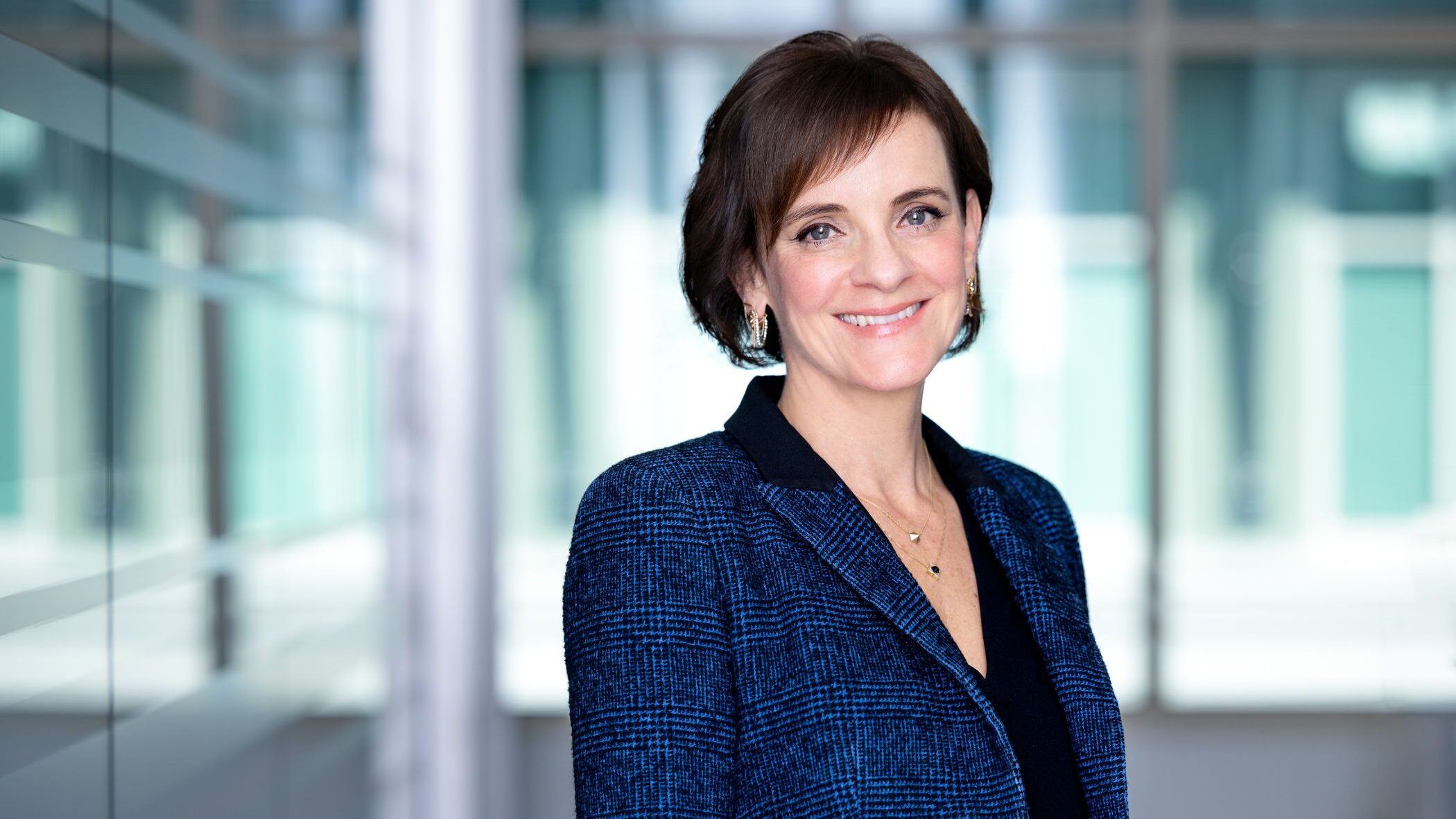
Cristin Hubbard Reflects on a Career Spent Bringing Innovation to Patients – and Why Working at BioMarin Has Her More Energized Than Ever
August 7, 2026
Cristin Hubbard is still motivated by the same idea that sparked her earliest interest in healthcare and eventually led her to biopharma: getting medicines to the people who need them most.
At BioMarin, Cristin says she feels the impact of that commitment as strongly as ever.
“What I love about working in rare disease is the connection to the communities we serve,” says Cristin, BioMarin’s Chief Commercial Officer. “You feel like every contribution matters so deeply for patients and their families.”
From early work as a medicinal chemist to leading global commercial teams, her career has been shaped by a consistent focus on bringing innovation closer to patients. She’s applying those experiences to help BioMarin leverage its global footprint and capabilities and ultimately reach more people living with rare genetic conditions around the world.
We sat down with Cristin to reflect on her professional journey, her leadership philosophy and why she feels like her work at BioMarin is the most impactful of her career.
Q: When you describe your career journey, what are some of the key inflection points that stand out?
I always knew I wanted to be in healthcare. My mom was a nurse, and that had a big influence on me from a young age. I initially thought I’d go into patient care directly, but in college I shifted toward science and ended up working as a medicinal chemist at a small biotech.
I loved the work – it felt like solving a massive puzzle with the potential to become a medicine one day. But over time, I realized I wanted to be closer to getting medicine to patients. Drug discovery is profoundly important work, but is at the very beginning of the process, and I was drawn to work further downstream in the pharmaceutical life cycle – clinical development, portfolio planning, product strategy, commercialization, getting treatments to healthcare providers and patients.
That realization led me to business school and into roles that moved progressively closer to patients, first in portfolio and product strategy, and then into commercial leadership. At first, I thought, “There’s no way – a scientist becoming a commercial leader?” But I took the leap when the opportunity came, and it was one of the most formative experiences of my career.
Looking back, I was fortunate to get exposure across the entire value chain. At the time, it didn’t feel like a straight line, but each step added another tool to my proverbial belt.
Q: You’ve now been at BioMarin for more than two years. What about your experience here has felt different than previous roles?
The opportunity to lead a global commercial organization has of course been an incredibly rewarding challenge and a defining role in my career. What adds to that is the opportunity to do so at a leading rare disease company. I had worked on rare disease launches earlier in my career, and it completely captured my heart, which was a big part of why I joined BioMarin. The connection to patients, families and communities is so direct – every decision feels personal, and every contribution matters in a very tangible way.
BioMarin also has something special culturally. The leadership team has deep conviction in the mission and purpose, but at the same time, a real openness to change. During my time here, there has been a shared understanding about needing to shift our strategy – while hanging onto what has made BioMarin such a special place – in order for the company to reach its full potential. That conviction in both the meaning behind the work and the opportunity to evolve into something even more impactful is incredibly compelling.
Q: In your view, where are BioMarin’s greatest strengths, and what is an area of opportunity as the company continues to evolve?
I think BioMarin sits in a bit of a sweet spot, both in terms of our size and our leadership in rare disease.
We have the resources to make meaningful impact at scale, while maintaining the agility to move quickly, make decisions, and stay close to patients and the communities we serve. That combination is part of what sets us apart.
One of our defining strengths as a leader in rare disease is our global footprint. We currently reach patients in about 80 countries, with a meaningful presence that often involves navigating complex healthcare systems and enabling access where traditional rare disease infrastructure may not exist. That’s a capability we’ve developed over many years, and it’s highly distinctive.
Another key strength is our ability to help identify people who may benefit from our medicines. Many rare conditions are underdiagnosed or misdiagnosed, making prevalence difficult to understand. We’ve invested in genomics, diagnostics and data analytics, and we’re continuing to explore how AI and machine learning can help identify potential patients earlier. It’s an area where we’ve built deep expertise and continue to raise the bar to create impact across multiple conditions.
That combination of global reach, specialized capabilities and purpose-driven focus is what I see as BioMarin’s unique proposition today.
At the same time, as innovation in rare disease has advanced, the landscape has become more competitive. It’s not enough to simply be first to market. The standard is higher, and our focus must be on delivering the best possible outcomes for patients.
Our opportunity is to continue leading in rare disease because our work genuinely changes lives. That goes beyond scientific innovation, which is of course critical. But one of our biggest advantages comes from deeply understanding the patient communities we serve and ensuring we’re delivering in the most meaningful way possible.
Q: BioMarin completed its acquisition of Amicus Therapeutics at the end of April. How are your teams approaching the integration, and what do you see as the greatest opportunity now that the two companies have come together?
It’s about maintaining momentum while expanding impact.
First and foremost, we want to continue the strong work already underway and support the Fabry and Pompe communities without disruption. But beyond that, I’m really excited about what we can add. We have capabilities – particularly in terms of identifying patients and leveraging our global footprint – that can help bring these therapies to more people around the world. The opportunity to expand access and reach new communities is incredibly motivating.
Q: What’s your approach to leadership?
My role is to unlock the potential in people.
That means removing obstacles, creating clarity and sometimes reminding people of their own strengths – especially when they don’t see them themselves. It also means putting the right leaders in place at the right time for what we’re trying to achieve.
I often think about the kind of leader I want to be remembered as. For me, it’s someone who is willing to fight to do the right thing. And I say “fight” intentionally, because doing the right thing isn’t always the easiest path.
It’s about having the courage to speak up, to make hard decisions and to stay committed above all else to patients, science, purpose and our people. And just as importantly, it’s about creating an environment where people feel safe to bring their full selves to work. That, to me, is when you really unlock what teams are capable of.
Q: What do you do outside of work to stay balanced?
Whenever I can, I like to be outdoors, whether that’s hiking with a friend, audio book or podcast, or spending time with friends after a long day.
I also try to start the day with an early-morning workout or yoga class whenever I can. It helps set the tone for the day ahead.
And I spend a lot of time with my family: my mom and my sister and her family. We talk almost every day, and we make it a priority to stay close. That connection keeps me grounded and reminds me what really matters.